Shaping the Future: Dr. Kevin Jones on Why AI Literacy Is a Civil Rights Issue
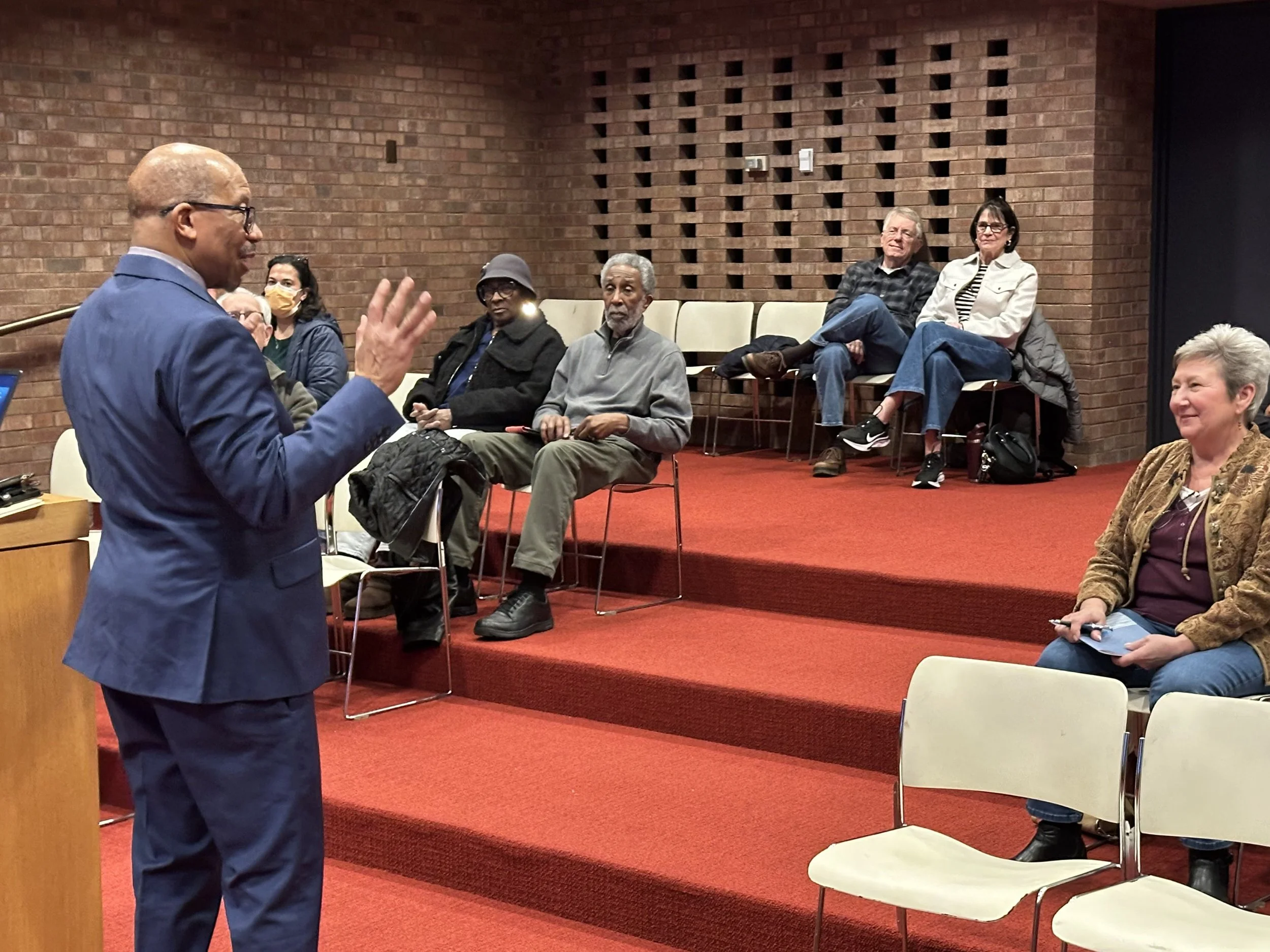
During Black History Month, our community gathered for a powerful and thought-provoking presentation led by Dr. Kevin Jones on a topic that is rapidly shaping our world: artificial intelligence.
Rather than focusing on technical complexity, Dr. Jones grounded the conversation in a much deeper question:
Who gets to shape AI — and who gets shaped by it?
Beyond the Hype: What AI Is Really Changing
Dr. Jones opened by cutting through the hype and confusion surrounding AI, grounding the conversation in a concept he calls "The AI Era within the Age of Accelerated Transformation (AoAT)." He described this as a period defined by rapid change, unpredictability, and disruption — not caused by any single force, but by the collision of multiple powerful forces at once: political, economic, societal, and technological. Within this landscape, AI stands out as an external disruptive force that is simultaneously speeding up and fundamentally reshaping how we work, live, and function as a society.
Importantly, Dr. Jones made clear that AI is not a future concern — it is already here and already consequential. It is shaping who gets called for a job interview, influencing medical diagnoses, changing how students learn, driving decisions in financial systems, and quietly powering the digital tools millions of people use every day.
But his goal wasn’t to turn participants into technologists.
Instead, Dr. Jones emphasized building awareness and agency.
“This isn’t about becoming AI experts,” he shared. “It’s about becoming informed and empowered so we can shape how AI shows up in our communities.”
The presentation highlighted five essential human skills that will matter most in an AI-driven world:
Critical thinking
Ethical judgment (Discernment)
Creativity
Adaptability
Empathy
Through practical examples from education, workforce development, and daily life, Dr. Jones invited the audience to wrestle with meaningful questions:
What decisions should AI assist with?
What decisions must remain fundamentally human?
How do we remain intentional rather than reactive as technology accelerates change?
AI and the Civil Rights Legacy
Presented during Black History Month, the conversation carried particular weight.
Dr. Jones connected today’s AI influence to historical patterns of innovation and exclusion. He acknowledged a critical truth: when emerging systems are built without diverse voices at the table, they can reinforce bias and inequity rather than expand opportunity.
AI literacy, he explained, is not simply professional development — it is a modern civil rights issue.
If communities are absent from the shaping of technology, they risk being disproportionately affected by it. But when communities engage — through education, entrepreneurship, policy, and creative exploration — they help ensure that AI reflects equity, opportunity, and justice.
The discussion did not ignore legitimate concerns. Topics such as fairness, privacy, bias, workforce disruption, and trust were addressed openly. Rather than fueling fear, Dr. Jones framed these concerns as reasons for engagement.
Avoidance, he noted, is not a strategy. Participation is.
Building Agency in the Age of Accelerated Transformation
Though the gathering was intimate, the impact was significant. Attendees left with a clearer understanding that AI is neither hero nor villain — it is a tool. And like all tools, it reflects the values of those who guide its use.
Dr. Jones challenged the room to move from passive consumption to active participation.
The future of AI will not be shaped by technology companies alone. It will be shaped by educators, parents, students, faith leaders, creatives, entrepreneurs, and community members who choose to engage thoughtfully and responsibly.
As the evening closed, one message resonated clearly:
The Age of Accelerated Transformation is already underway, and the Era of AI is not on the horizon — it is happening right now, inside of it. The question is whether we will help shape it — or simply adapt to it.
Our communities deserve a seat at that table.
Stay Connected
If this conversation sparked new questions or ideas for you, the learning doesn’t have to stop here.
Dr. Kevin Jones regularly shares insights on artificial intelligence, leadership, innovation, and equity in the digital age.
👉 Follow Dr. Kevin Jones on LinkedIn to continue the conversation and stay informed about future talks, reflections, and resources. Because shaping the future of AI starts with staying engaged.
About Black History Month Columbus: Black History Month Columbus is about celebrating Black culture, telling the true stories of Black history, and honoring the legacy and accomplishments of the Black community. Join us as we are creating a momentum for community healing through inspiring and educational experiences, and we warmly invite our neighbors from all walks of life to participate ♥